Complete Residential and Commercial Rewiring Services in Blue Springs
The internal wiring hidden behind the walls of your Blue Springs building dictates the structural safety and operational reliability of your entire electrical system. Over decades, electrical conductors endure thermal expansion, vibration, mechanical stress, and chemical degradation of protective sheaths. In Blue Springs—which encompasses historic properties, mid-century residential builds, and expansive commercial retrofits—aging wiring systems can silently transform into severe fire and electrocution hazards. WATT911 connects property owners throughout Jackson County with licensed, detail-oriented electrical contractors specializing in partial and whole-property rewiring projects.
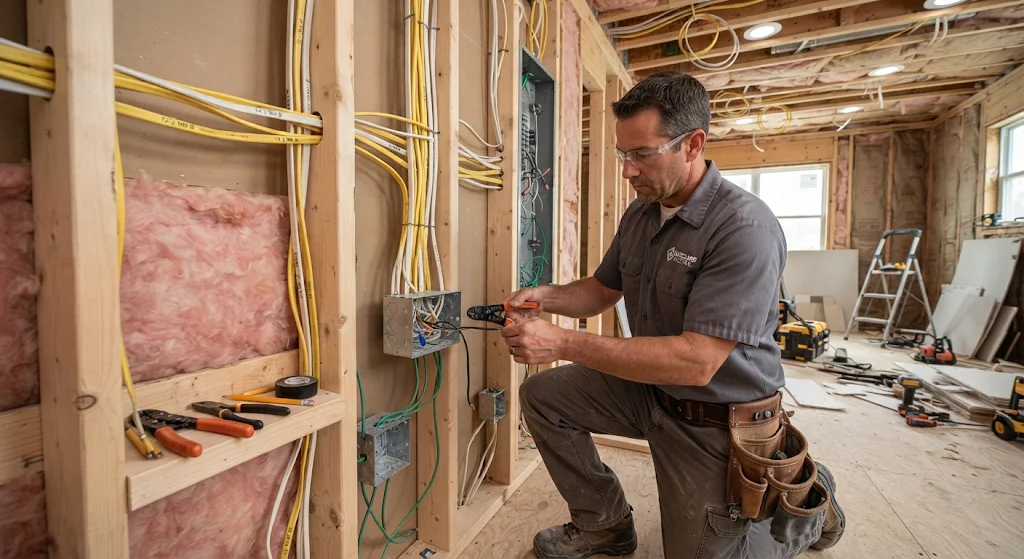
Identifying Hazardous Legacy Wiring Systems
Understanding the age and architectural history of your Blue Springs building is essential when evaluating wiring safety. Independent contractors routinely inspect and remediate several obsolete wiring methodologies:
- Knob-and-Tube (K&T) Wiring: Common in homes constructed before 1950, K&T wiring utilizes single copper conductors suspended through porcelain tubes and knobs. It lacks an equipment grounding conductor, is vulnerable to thermal trap fires if covered by modern attic insulation, and suffers from brittle, crumbling rubberized cloth insulation.
- Ungrounded Cloth-Jacketed NM Cable: Popular from the late 1940s through the 1960s, these circuits often feature two-wire cables without a grounding conductor. Connecting modern three-prong devices or surge protectors to ungrounded circuits creates severe electrical shock and equipment damage risks.
- Solid Aluminum Branch Circuit Wiring: Installed in many residential properties during the late 1960s and early 1970s due to copper supply shortages, single-strand aluminum wiring expands and contracts at much higher rates than copper. This causes terminal connections at switches and receptacles to loosen over time, leading to oxidation, high electrical resistance, and wall fires.
- Undersized DIY Extension Remodels: Previous renovations executed without municipal permits often mix wire gauges (such as splicing 14 AWG wire onto 20-amp circuits), creating hidden over-current fire hazards.
Local Architectural Nuances in Blue Springs
Located east of Kansas City along the I-70 commuter corridor near Burr Oak Woods, Blue Springs boasts rapid family residential growth, lakeside properties near Lake Jacomo, and expanding neighborhood commercial centers.. When executing whole-home rewiring across these structures, experienced local contractors utilize specialized fish tape techniques, flexible auger bits, and attic/crawlspace routing paths to preserve historic plaster, lath, or custom interior drywall finishes while modernizing infrastructure to City of Blue Springs Community Development Department code.
Structured Phasing of a Whole-Home Rewire Project
A whole-house rewiring project is a major infrastructural undertaking. Independent electrical professionals connected through WATT911 approach the task methodically to minimize disruption:
- Comprehensive Circuit Mapping & Assessment: Tracing every existing switch, luminaire, junction box, and receptacle to build a detailed schematic of current load distribution and structural access points.
- Permitting & Engineering Plan Review: Submitting formal project drawings to the municipal building authority in accordance with Permits are mandatory for service replacements, solar tie-ins, and EV circuit additions under Jackson County and municipal safety codes..
- Concealed Wire Fishing & Path Creation: Utilizing crawlspaces, unfinished basements, and attic chases to pull fresh 12 AWG and 14 AWG copper Romex or EMT conduit with minimal wall incisions.
- Dedicated Branch Installation: Installing separate, dedicated 20-amp circuits for high-draw kitchen appliances, bathrooms, laundry rooms, home offices, and outdoor circuits.
- AFCI / GFCI Protection & Trim-Out: Installing tamper-resistant, commercial-grade receptacles and dual-function Arc-Fault / Ground-Fault circuit breakers in the main panel to provide state-of-the-art life safety.
Planning a Rewiring Project in Blue Springs?
Connect with licensed local electrical contractors who specialize in safe, minimally invasive rewiring for homes and businesses throughout Blue Springs.
Call (888) 605-9975 for Consultation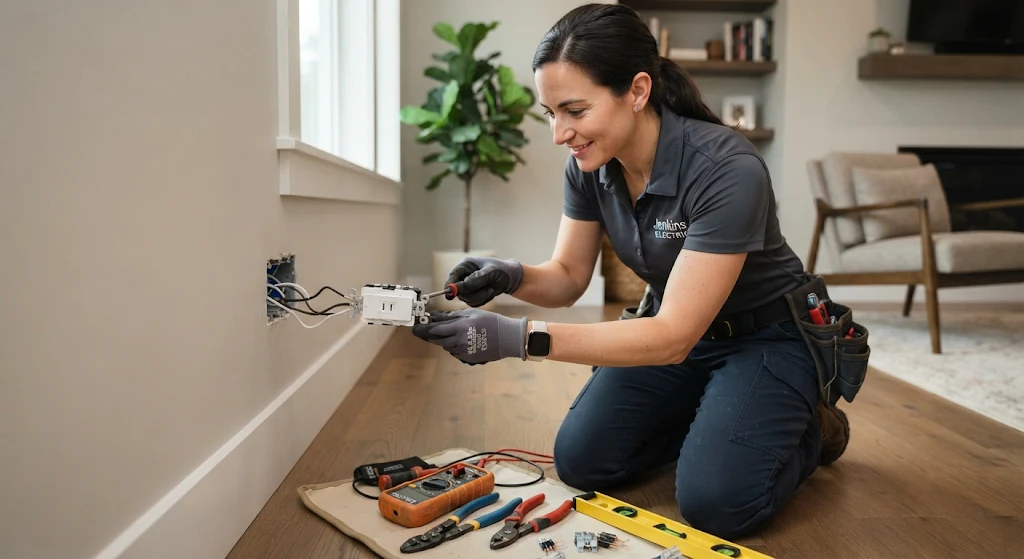
Aluminum Wiring Remediation Alternatives
For Blue Springs homeowners with aluminum branch wiring who may not require full wall-opening rewires, contractors can evaluate approved remediation alternatives such as the COPALUM crimp method or AlumiConn lug connectors. These specialized connectors create a metallurgically secure bond between copper pigtails and the original aluminum conductors, eliminating thermal creep at device terminals while conforming to CPSC safety standards.
Transparent Network Disclaimer
WATT911 connects property owners with independent licensed electrical contractors. WATT911 is not a licensed electrical contractor and does not perform physical rewiring or contractor oversight. All contract terms, guarantees, permits, and inspections in Blue Springs remain the exclusive responsibility of the engaged contractor. Permits are mandatory for service replacements, solar tie-ins, and EV circuit additions under Jackson County and municipal safety codes.